



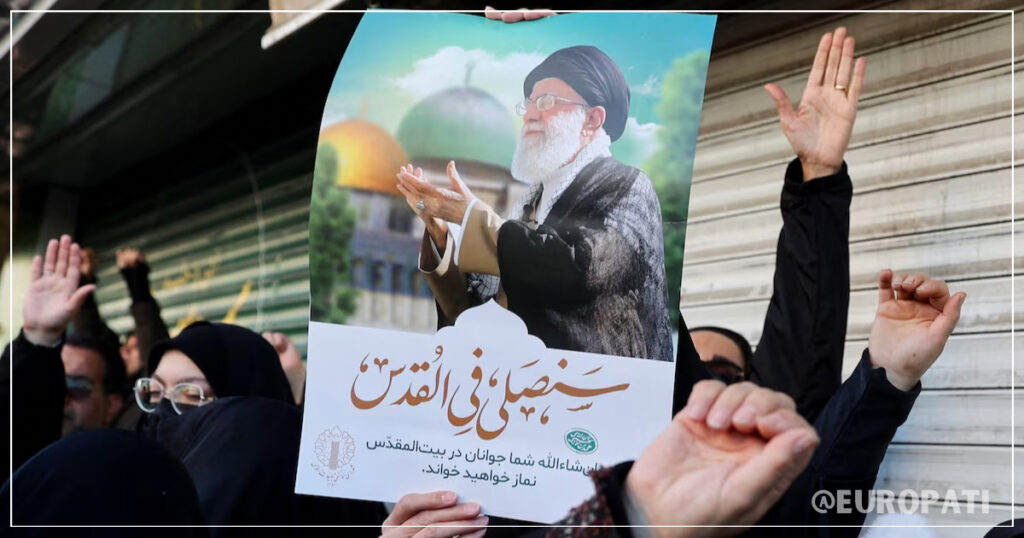
Portugal — The death of Iran’s Supreme Leader, Ayatollah Ali Khamenei, in a series of joint U.S. and Israeli military strikes has sent shockwaves across the globe, triggering a wave of polarized international reactions. Confirmed by Iranian state media following a fresh wave of attacks on Sunday, the passing of the leader who guided Iran for decades marks a seismic shift in Middle Eastern politics, leaving the world to grapple with both the hope for democratic change and the fear of an uncontrollable spiral of violence.
Western leaders have largely characterized the event as a potential turning point for the Iranian people. European Commission President Ursula von der Leyen remarked that Khamenei’s departure offers “new hope” to the citizens of Iran, emphasizing that the future of the nation belongs in their hands, though she warned of the “real risk of instability” that could engulf the region. Similarly, French government spokesperson Maud Bregeon welcomed the news, holding Khamenei responsible for the deaths of thousands and stating that Iranians must now choose their own destiny. Italy’s Foreign Minister Antonio Tajani noted that while the transition remains uncertain, the loss of Khamenei’s personal authority marks a definitive end to an era of rigid guidance.

In stark contrast, Russia has condemned the killing as a flagrant violation of international norms. President Vladimir Putin expressed his “deepest condolences” to the Islamic Republic and Khamenei’s family, describing the assassination as a cynical breach of human morality and international law. This reaction highlights the deep geopolitical rift the event has widened, with Moscow standing firmly against the military actions of the U.S. and Israel.
The Muslim world has also seen significant pushback, particularly from Indonesia’s Council of Ulema (MUI). Expressing deep sorrow over the leader’s death, the Council launched a scathing critique of U.S. strategy in the region.
They questioned whether the American role in the Palestinian conflict is aimed at true justice or merely reinforcing “unequal security structures.” In a bold move, the MUI urged the Indonesian government to withdraw its membership from the international Peace Board (BoP) in protest.
As the dust settles, the prevailing sentiment among global observers remains one of profound uncertainty.
While figures like EU Foreign Policy Chief Kaja Kallas see a “decisive moment” that opens a path for a freer Iran, others, including Swedish Foreign Minister Maria Stenergard, warn that the road ahead is long and fraught with the danger of further escalation. The world now watches closely to see whether this moment leads to a new era of Iranian liberty or a wider regional conflagration.

